The question usually comes up right after booking flights or scrolling through photos of catamarans, zip lines, and Saona Island beaches – are Punta Cana excursions safe? For most travelers, the honest answer is yes, they can be very safe when you choose established operators, understand what you are booking, and match the activity to your comfort level. Punta Cana is one of the Caribbean’s busiest tourism destinations, and its excursion industry is built around serving visitors every day. Still, not every tour is run to the same standard, and safety depends on more than the destination alone.
That distinction matters. Travelers often ask if Punta Cana itself is safe, but excursions are a different category. A resort transfer, a small-group snorkeling trip, and an off-road buggy tour each involve different vehicles, different environments, and different levels of physical risk. The better question is not simply whether excursions are safe, but which ones are safest for your travel style and how to spot a well-managed experience before you book.
Are Punta Cana excursions safe in general?
In general, yes. Most excursions in Punta Cana are designed for mainstream leisure travelers, including couples, families, and first-time visitors who are not looking for extreme adventure. Popular tours run daily, transportation routes are well established, and reputable companies know that safety, timing, and guest support are part of the product.
That said, “safe” does not mean risk-free. A calm catamaran cruise can still involve sun exposure, alcohol, slippery decks, or rougher water on a windy day. A dune buggy outing may be fun and beginner-friendly, but it also means dust, uneven terrain, and shared roads in some areas. Excursion safety is usually about risk management rather than avoiding risk entirely.
This is where booking quality matters. Well-run tours tend to be clear about pickup details, age restrictions, health considerations, equipment use, and weather changes. Lower-quality operators are more likely to be vague, oversell the experience, or rush logistics in ways that make travelers uncomfortable.
What actually affects excursion safety?
The biggest factor is the operator, not just the activity. Two companies can offer a similar island tour or snorkeling trip, but the guest experience may be very different depending on guide training, boat maintenance, group size, driver quality, and how seriously they handle briefings.
Transportation is one of the first things to pay attention to. Many Punta Cana excursions begin with hotel pickup, and reputable providers organize this carefully. Clear meeting points, confirmed schedules, and professional drivers all reduce stress and confusion before the tour even begins. If pickup instructions are disorganized or communication is poor before booking, that can be an early warning sign.
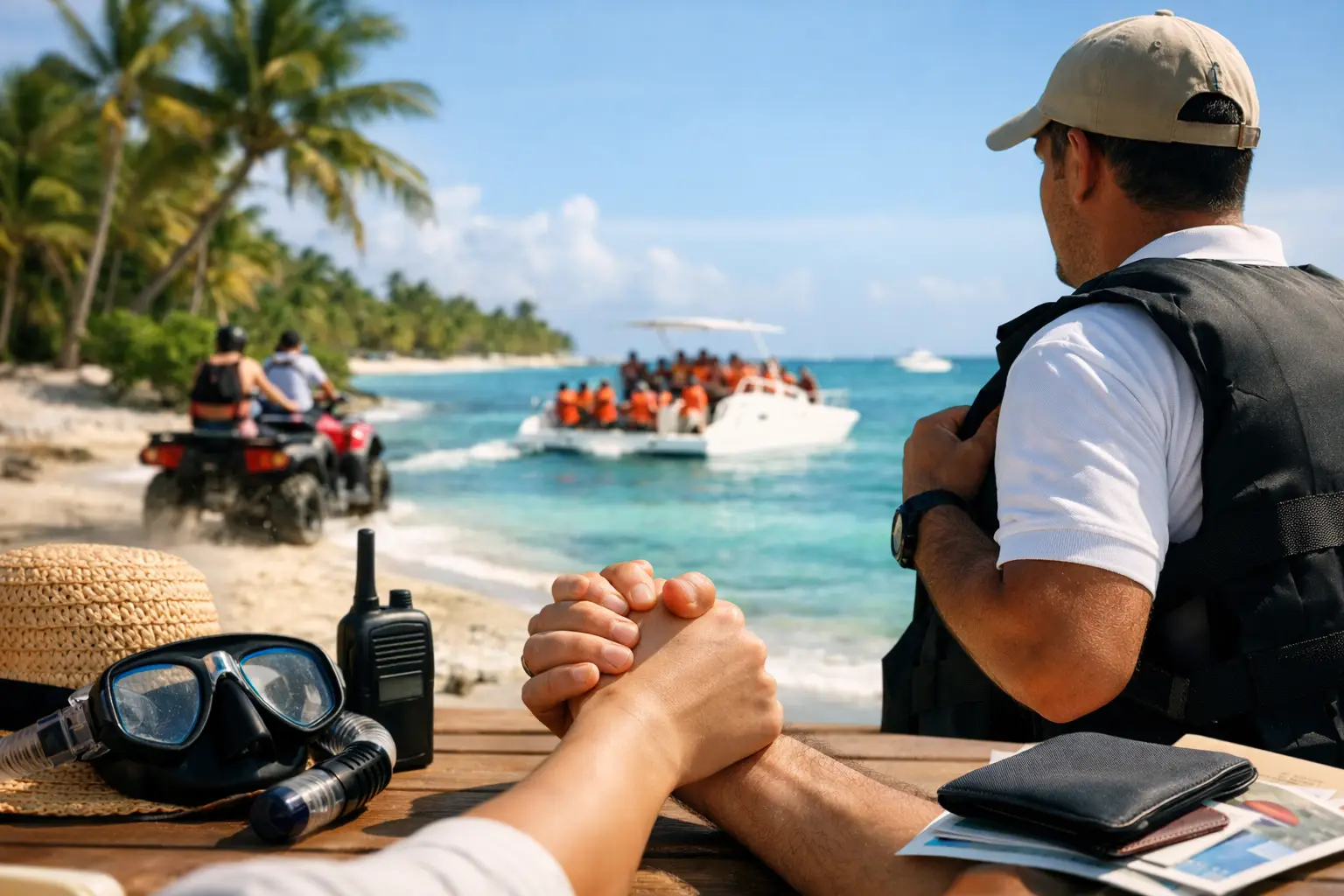
Equipment and supervision matter just as much. On marine tours, life jackets should be available and easy to access. On zip line or parasailing activities, harnesses and safety systems should be checked and explained. On ATV or buggy experiences, guides should set expectations about speed, spacing, and terrain instead of treating the tour like a free-for-all.
Weather also plays a real role. Punta Cana excursions often happen in open-air settings where wind, heat, rain, and sea conditions change the experience quickly. Good operators adjust routes, delay departures, or modify activities when needed. That can be disappointing in the moment, but it is often a sign that the provider is putting guest safety ahead of squeezing in every part of the itinerary.
Which excursions tend to feel safest?
If you want the lowest-stress options, choose excursions with controlled pacing and strong staff presence. Catamaran cruises, cultural tours, cenote visits with supervision, and organized day trips to places like Saona Island or Santo Domingo are often comfortable for a wide range of travelers. These tend to be structured, social, and designed for guests with no specialized experience.
Private tours can also feel safer for travelers who value control. They allow more flexibility with timing, less crowding, and easier communication with the guide or driver. For families with children, older travelers, or anyone who gets overwhelmed in large groups, that extra personalization can improve both comfort and safety.
Water-based tours can be very enjoyable and safe, but they require a little more honesty from guests. If you are not a strong swimmer, are prone to motion sickness, or feel nervous in open water, say so before booking. A reputable provider can steer you toward the right boat trip, choose gentler conditions, or recommend an activity that better fits your confidence level.
Which tours need extra caution?
Not all excursions carry the same level of physical demand. Off-road buggies, ATVs, parasailing, zip lines, party boats, and some snorkeling trips call for more attention because they involve speed, height, open water, or more energetic group dynamics.
Buggy and ATV tours are a good example. They are popular because they are fun, messy, and accessible to beginners, but they are not ideal for everyone. Expect dust, bumps, occasional mud, and varying road conditions. If you have back pain, limited mobility, or simply dislike fast-moving group activities, this may be more stressful than enjoyable.
Party-style boat excursions deserve a specific mention too. They are not automatically unsafe, but the atmosphere can be more relaxed and alcohol-forward than some travelers expect. If your ideal day on the water is calm, scenic, and family-friendly, ask whether the trip is a party boat, a snorkeling cruise, or a more balanced catamaran experience. The label matters less than the actual vibe and crowd.
How to choose a safer excursion in Punta Cana
The simplest way to reduce risk is to book with a company that acts like a travel partner, not just a ticket seller. You want clear communication before arrival, realistic descriptions, multilingual support if needed, and someone who can explain which tours fit your group.
Look closely at how the excursion is presented. Are the activity level, timing, transportation, and restrictions clearly explained? Does the provider mention what to bring, who the tour is best for, and whether children or non-swimmers can join? Clear details usually reflect organized operations.
It also helps to think beyond price. The cheapest option is not always unsafe, but very low prices can sometimes mean crowded groups, older equipment, rushed transfers, or thinner staffing. Value comes from reliability and experience design, not just the base rate.
This is one reason many travelers prefer curated local providers such as Adventures Finder when planning in Punta Cana. The advantage is not only booking convenience. It is having someone who understands the differences between tour types, local logistics, and traveler expectations well enough to recommend the right fit instead of pushing a generic top seller.
Smart safety habits once you are on the tour
Even the best operator cannot control every choice a guest makes. A lot of excursion safety comes down to practical decisions during the day.
Listen to the briefing, even if the activity looks simple. Travelers often tune out instructions on boats, buggies, and zip line platforms because the setting feels relaxed. That is usually where the most useful safety information is shared.
Dress for the activity, not just the vacation photo. Water shoes, secure sandals, sun protection, and a dry bag can make a bigger difference than people expect. On buggy tours, sunglasses and a face covering are often more useful than stylish beachwear. On boat trips, hydration matters just as much as sunscreen.
Be realistic about your limits. If you are pregnant, managing an injury, traveling with very young children, or have a medical condition affected by heat, motion, or exertion, ask questions before you commit. A trustworthy tour provider would rather help you choose a better option than have you struggle through the experience.
Are Punta Cana excursions safe for families and solo travelers?
Usually, yes – with the right match. Families often do best on organized day trips, wildlife or nature experiences, gentle boat tours, and private transportation-based excursions that remove some of the logistical pressure. The key is choosing activities with predictable pacing, clear supervision, and age-appropriate expectations.
Solo travelers should not assume they need to avoid excursions. In fact, guided tours can be one of the easiest ways to explore Punta Cana confidently. Group excursions provide structure, transportation, and a social setting, while private options offer more independence with professional support. The main consideration is choosing a provider that communicates clearly and has a track record of serving international guests well.
If you are still wondering whether to book, the safest approach is not to avoid excursions altogether. It is to choose them thoughtfully. Punta Cana offers memorable experiences on the water, in the countryside, and beyond the resort gates, and most travelers can enjoy them comfortably when expectations are clear and the operator is dependable.
A good excursion should leave you with great stories, not second guesses, so trust providers who make you feel informed before the day even begins.